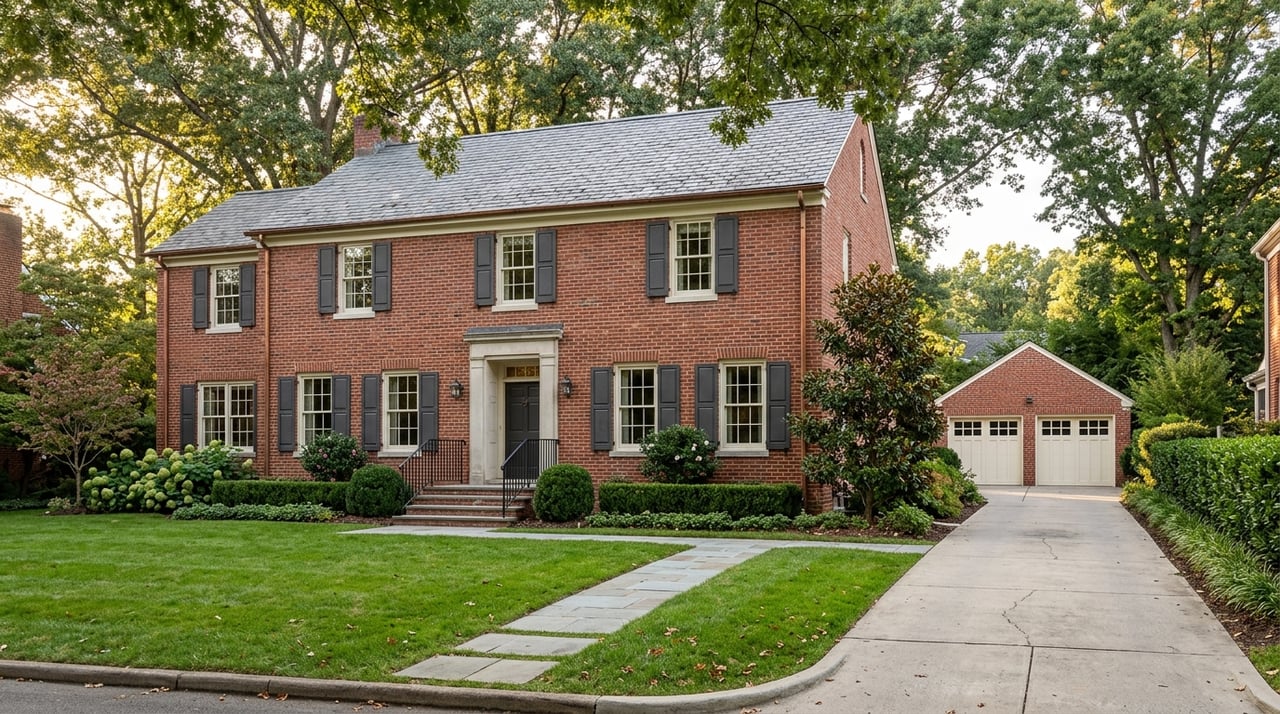
If you are moving up in Richmond, choosing the right West End neighborhood can feel harder than choosing the house itself. A few blocks can change your lot size, your daily routine, and even your tax jurisdiction or school zone. The good news is that the West End gives you several strong options, and each one offers a distinct mix of space, character, and convenience. This guide will help you compare the most relevant pockets so you can narrow your search with more confidence. Let’s dive in.
Why the West End Feels So Different
The Cary Street Road, Country Club of Virginia, and Libbie-Grove corridor sits along the Richmond and Henrico edge. That matters because even a short move can place you in a different jurisdiction, which may affect taxes and school assignment.
For many move-up buyers, the appeal is clear. You often gain older homes with stronger architectural character, larger lots, and a more established neighborhood identity than you may find in newer areas. In exchange, many of these neighborhoods are still more car-oriented than the urban core.
Start With These Three Priorities
Before you fall in love with finishes or curb appeal, compare the basics that shape day-to-day life.
Check school zoning by address
In this part of Richmond, school zoning should be verified by the exact street address, not the neighborhood name. Richmond Public Schools assigns zone schools by physical address, and open enrollment is handled separately.
That means two homes in the same general area may not have identical assignments. If school zoning matters to your move, make address-level verification one of your first steps.
Compare lot size early
Lot size is one of the clearest separators among West End options. It often shapes privacy, outdoor living, maintenance, and the overall feel of the property.
Here is the general pattern from the available sample data:
- Stonewall Court: mostly about 6,700 to 7,000 square feet, with some properties up to about 0.4 acre
- Tuckahoe Terrace: roughly 0.23 to 0.34 acre
- Hampton Gardens: about 0.44 to 0.50 acre in the sample homes
- Windsor Farms: about 0.35 to 0.57 acre in the sample homes, and sometimes larger
If you want more garden space or privacy, this comparison can quickly point you in the right direction.
Be honest about walkability
These neighborhoods do not all offer the same daily rhythm. If you want to walk to shops or restaurants with some regularity, the Libbie-Grove edge of Tuckahoe Terrace stands out in the sample data.
Windsor Farms also offers broader convenience through proximity to Carytown, the Fan, Maymont, museums, shopping, and interstate access. Stonewall Court and Hampton Gardens, by contrast, read as more car-oriented overall.
Stonewall Court: Character Without Overshooting
What Stonewall Court offers
Stonewall Court sits around streets such as Lexington, Albemarle, Greenway, Kensington, Oak, and Seneca. Based on the available data, it offers a useful middle ground for buyers who want classic Richmond character and an in-town location without stepping all the way into the larger estate-style category.
Sample homes show a range from renovated older properties to larger parcels. Lot sizes in the data run from about 6,969 square feet up to roughly 0.4 acre, which gives you some flexibility without the scale typically associated with the biggest West End estates.
Price and pace
Redfin’s March 2026 market page shows a median sale price of $853,000 based on just two sales, with the neighborhood described as very competitive. Because sales volume is thin, a small number of closings can move the median quickly.
That makes pricing here best viewed as a directional snapshot, not a fixed rule. In practical terms, Stonewall Court may appeal if you want a move-up option with identity and convenience, but you do not need the largest lots in the corridor.
Daily feel
The same market page reports a Walk Score of 37 and Bike Score of 38. That points to a mostly car-oriented lifestyle, even though the area remains relatively well placed for in-town access.
If your priority is a shorter commute into central Richmond and a neighborhood with mature character, Stonewall Court deserves a look. Streets to shortlist include Lexington Road, Albemarle Avenue, Greenway Lane, Kensington Avenue, Oak Lane, and Westmoreland Street.
Tuckahoe Terrace: A Strong All-Around Choice
Why many move-up buyers start here
Tuckahoe Terrace runs along Tuckahoe Boulevard, Matoaka, North and South Wilton, Seneca, Westview, and nearby Libbie-Grove streets. For many buyers, this neighborhood offers one of the best balances of size, location, and convenience.
Homes here are typically from 1938 to 1950, according to Neighborhoods.com. Current prices are reported around $1.295 million, with a median sale price of $1,405,250 and an average price per square foot of $386.
Space with convenience
Sample properties show lot sizes around 0.28, 0.34, and 0.2298 acre. That puts Tuckahoe Terrace noticeably above many smaller in-town lots while still keeping you close to daily conveniences.
Some listings note walkability to the Libbie-Grove retail area, including nearby neighborhood businesses. If you want a larger house than you may find in some nearby pockets, but still value access to shops and restaurants, Tuckahoe Terrace is easy to understand.
Best fit for your lifestyle
This neighborhood often suits buyers who want a practical compromise. You may not get the biggest grounds in the West End, but you can gain a strong combination of home size, established streetscape, and easier access to everyday amenities.
If that sounds like your move-up goal, start by watching Tuckahoe Boulevard, North Wilton Road, South Wilton Road, Matoaka Road, Seneca Road, and the blocks closest to Libbie and Grove.
Hampton Gardens: More Space, More Privacy
What sets Hampton Gardens apart
Hampton Gardens includes Greenway Lane, Roslyn Road, Oak Lane, Harlan Circle, Hillcrest, and nearby streets west of Grove and east of Westview. In the available sample data, this is the most estate-like option outside Windsor Farms.
Neighborhoods.com reports current prices around $1.1 million, a median sale price of $1,672,500, and an average price per square foot of $253. Homes generally date from 1922 to 1956 and often offer larger floor plans.
Lot size drives the appeal
The sample listings help explain the neighborhood’s reputation. Examples include 303 Roslyn Road at 0.48 acres, 403 Harlan Circle at 0.5 acres, and 307 Oak Lane on a 0.44-acre lot that closed at $4 million.
For a move-up buyer, that often means more room for outdoor living, more separation from neighbors, and a quieter residential feel. If privacy and scale are high on your list, Hampton Gardens moves up quickly.
Lifestyle tradeoff
The convenience story here is more selective. Sample listing data shows mixed lifestyle scores, with some addresses offering a bit of walkability while others read as more car-dependent.
That suggests a neighborhood where the focus is less on a walkable grid and more on house size, garden space, and a calm setting. If you want that kind of residential experience, look closely at Greenway Lane, Roslyn Road, Harlan Circle, Oak Lane, and Hillcrest Avenue.
Windsor Farms: Prestige, History, and Range
The broadest luxury option
Windsor Farms is one of Richmond’s best-known historic neighborhoods, and the available data supports its reputation for established, estate-oriented homes. Civic and historic references place notable properties such as Virginia House and Clovelly within Windsor Farms.
Redfin’s January 2026 market page shows a median sale price of $1.1 million, a sale price per square foot of $360, and a very competitive market. Current and recent examples also show broad variation by property, which is important to understand when you compare opportunities here.
What buyers should expect
Sample homes include 101 Windsor Way at 0.57 acres and 5,005 square feet, along with other lots around 0.35 acres and asking prices around $1.9 million to $2.0 million in some listings. That range tells you Windsor Farms is not one-size-fits-all.
You may find meaningful variation in home scale, lot size, and price point. But in general, this neighborhood comes with higher expectations around both purchase price and ongoing upkeep.
Convenience plus legacy appeal
Although Windsor Farms is still car-dependent overall, with a Walk Score of 28 and Bike Score of 34, it offers strong location advantages. Redfin describes it as close to museums, shopping, schools, and interstate access, and one listing notes walkability to Carytown, the Fan and Museum District, Maymont, and the James River Park System.
If you want a neighborhood with a deeply established feel, larger grounds, and broad lifestyle access, Windsor Farms may be the strongest match. Streets to watch include Cary Street Road, Windsor Way, Clovelly Road, Calycanthus Road, and Gun Club Road.
How to Narrow Your Search
If these four neighborhoods all sound appealing, simplify the decision by matching them to your top priority.
Choose by your main goal
- If you want character and a relatively in-town feel: start with Stonewall Court
- If you want balance across house size and convenience: start with Tuckahoe Terrace
- If you want privacy and larger grounds: start with Hampton Gardens
- If you want historic prestige and the widest luxury range: start with Windsor Farms
Treat market stats carefully
One of the most important realities in this corridor is that neighborhoods often trade thinly. A single high-end or low-end sale can shift the median price noticeably.
That is why serious move-up buyers should use neighborhood numbers as a guide, not a conclusion. The better approach is to compare recent address-level sales, lot size, condition, and exact location within the neighborhood.
A Smart Next Step for Move-Up Buyers
In West End Richmond, the right choice usually comes down to tradeoffs, not absolutes. You may prefer the walkable edge of Tuckahoe Terrace, the quieter scale of Hampton Gardens, the classic middle ground of Stonewall Court, or the historic reach of Windsor Farms.
What matters most is finding the neighborhood that fits how you want to live now, not just the house that looks best online. If you want a clear, address-specific strategy for your move-up search in Richmond’s West End, schedule a private consultation with Chris Small Group.
FAQs
What should move-up buyers compare first in West End Richmond?
- Start with exact address-based school zoning, lot size, and how much walkability or car dependence fits your daily routine.
Which West End Richmond neighborhood offers the largest lots?
- Based on the sample data, Hampton Gardens and Windsor Farms tend to offer the largest lots, with many homes around 0.44 to 0.57 acre or more.
Which West End Richmond neighborhood feels most convenient for shops and restaurants?
- Tuckahoe Terrace stands out for access near the Libbie-Grove retail area, while Windsor Farms offers broader proximity to Carytown, museums, and other central Richmond destinations.
Are West End Richmond home prices easy to compare by neighborhood?
- Not always. These neighborhoods can have low sales volume, so one or two closings may shift the median price quickly.
Why should buyers verify school zoning by address in Richmond?
- Richmond Public Schools assigns zone schools by physical address, so neighborhood name alone is not enough to confirm a school assignment.