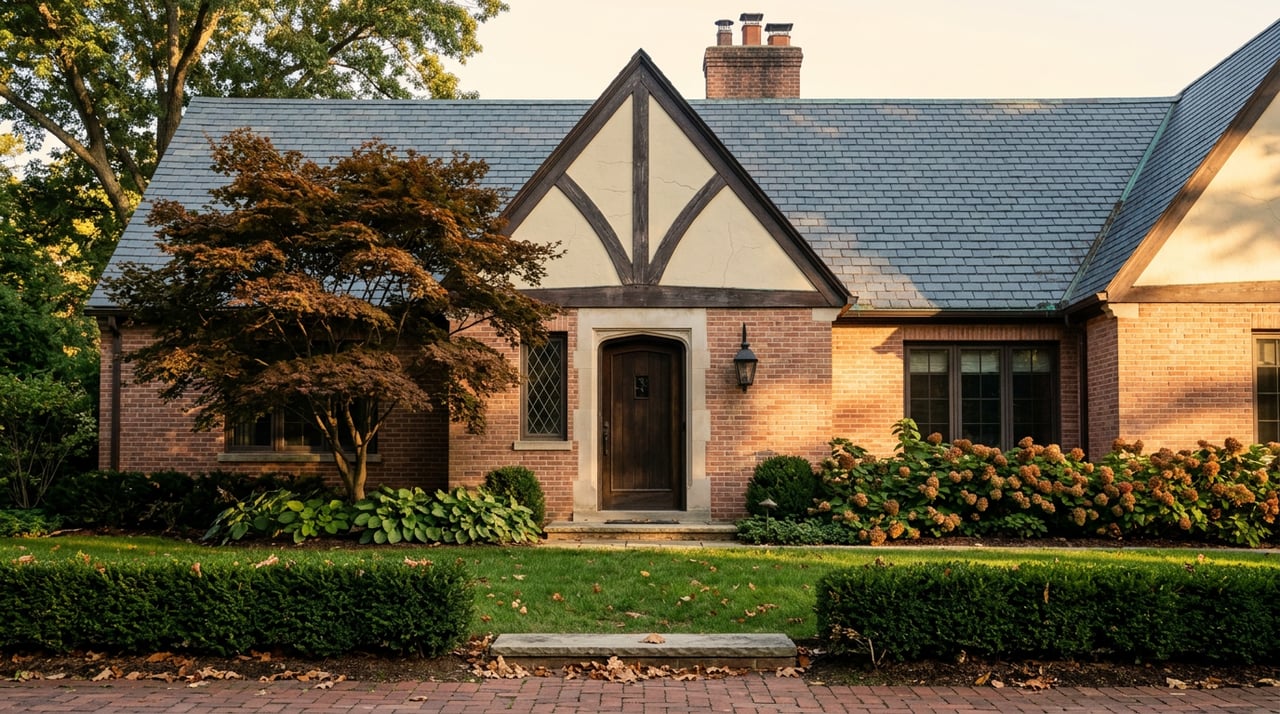
Most people in Windsor Farms drive past Agecroft Hall the way they drive past the mailbox on the corner of Dover and Canterbury. It registers. It doesn't stop you. The Tudor gables and the sunken garden have been sitting on that bend of the James River since before most current residents were born, which is exactly why it's easy to stop noticing it.
This year is the exception. Agecroft is marking its 100th year on Virginia soil, and the calendar built around that milestone is denser, more public-facing, and more explicitly about fundraising than anything the museum has run in recent memory. If you live within walking distance, that's worth understanding before the centennial year closes out.
A Roof, Not Just a Ribbon
The house itself was never Virginian. It was built in Lancashire, England, in the 16th century, later dismantled piece by piece and shipped across the Atlantic in the 1920s. The reconstruction on the James River was the work of Richmond businessman T.C. Williams Jr., his wife Elizabeth, and architect Henry Grant Morse. It opened to the public as a museum decades later, on July 5, 1969, and the grounds you see today, the terraces and the sunken garden modeled on Hampton Court Palace, were designed with landscape architect Charles Gillette in the 1930s.
None of that history is new. What's new is what the museum did with it in April. Agecroft marked its centennial with "Cheers to 100 Years!," a Roaring Twenties gala on April 11 with live jazz, period cocktails, lawn games, classic cars, a silent auction, and more than 5,000 tulips in bloom across the grounds. The proceeds weren't ceremonial. They're funding preservation work at the estate, including a new roof on the historic manor house.
Anne Kenny-Urban, Agecroft's executive director, said ahead of the gala that the museum was excited to "welcome more people to experience the magic of Agecroft this year."
That's the frame worth carrying into the rest of the year. The centennial isn't just a marketing label attached to the same programming Agecroft runs every year. It's a fundraising push for a building that needs physical work, and the fall calendar is an extension of that push, not a coincidence sitting next to it.
The Calendar Reads Differently This Year
By late summer the museum had already run Warriors in Bloom, an expanded two-day event on August 1 and 2 built around historical women warriors, with organizers adding a second day this year because of demand, plus new additions like an activated tavern hosted by WRIR DJs and hands-on demonstrations in Qi Gong and Gongfu.
September and October keep that pace up:
- September 20, 5:30 to 7 p.m. A free outdoor concert from the Richmond Concert Band, timed specifically to the centennial. The program mixes Renaissance-era pieces, honoring the house's English origins, with a medley of 1920s tunes marking its move to Richmond, plus what the museum is calling a "surprise" for the occasion. Bring a lawn chair or a blanket. DuCard Vineyards and S&N Juice Fountain will have stands set up on the lawn. If the weather doesn't cooperate, the concert moves to September 27.
- September 23, 7 to 8:30 p.m. A workshop on how perfume was made centuries ago, tied to Agecroft's Tudor-era collection.
- October 6, 13, and 20, 9 a.m. to noon. A recurring Tuesday-morning series of creative sessions held in the gardens each week.
Compare that to a typical year, where Agecroft's programming leans on its usual rotation of guided tours, a Renaissance faire, and seasonal markets. This fall adds a fundraising concert with corporate-style vendor tie-ins, a themed workshop, and a weekly recurring series scheduled across October. That's not the background hum of a museum keeping its doors open. That's an institution using its most active year in a century to ask the neighborhood to show up.
Visiting Two Manor Houses
Windsor Farms has a second English import less than a mile away, and the contrast is useful. Virginia House, relocated to the neighborhood from England in 1925 and now owned by the Virginia Historical Society, sits on nearly eight acres of Gillette-designed gardens overlooking the James. Visits generally run by appointment through the Historical Society, and the property is marketed for private rentals, portraits, and ceremonies.
Agecroft, by contrast, is conducting its centennial year in public. Free concerts on the lawn. Workshops open to anyone who registers. A Windsor Walk architecture tour through the neighborhood, led by architectural historian Chris Novelli and built around the same 1920s planning story that produced both manor houses, has sold out in past sessions, a sign that appetite for this kind of programming runs high whenever the museum offers it.
If you're deciding how to spend a free Tuesday morning or a Sunday evening this fall, Agecroft's public calendar gives you a place to start.
What This Means for the Rest of the Year
Windsor Farms was laid out in 1926 by John Nolen as an English-village suburb, with streets named Dover and Canterbury and a common green built into the plan from the start. Grace Baptist Church, which relocated to its current site on that green in 1949 and held its dedication ceremony in May 1950, still functions as one of the neighborhood's few shared anchors alongside the two manor houses. In a neighborhood built around a small number of communal touchpoints, a fundraising-driven centennial at one of those touchpoints is a bigger deal than it would be somewhere with a denser commercial strip absorbing the attention.
The practical takeaway for residents is timing. A centennial doesn't repeat. The density of this fall's calendar, the free concert with a fundraising undercurrent, the workshop, the weekly garden mornings, reflects a specific year the museum is treating as a one-time push rather than a template for next year's programming. If the goal is to actually walk over and see what's happening rather than watch it from the car window on the way to Cary Street Road, this is the season to do it.
If Windsor Farms is the kind of neighborhood where a single institution's centennial can reshape the fall calendar for everyone living nearby, it says something about the scale and character of the place worth understanding beyond this one season. The Chris Small Group has spent decades working inside neighborhoods like this one, and our Windsor Farms neighborhood guide goes deeper into what makes the area function the way it does. If you're weighing a move here, or just curious what the next chapter of a hundred-year-old house looks like from your own front porch, schedule a private consultation and we'll walk you through it.